

Connect with Icare from a private place when telehealth is appropriate.
Telehealth can make follow-up easier, but not every service or clinical situation can be handled safely from a distance. Eligibility depends on the visit type, patient location, clinical need, insurance, and prescribing requirements.
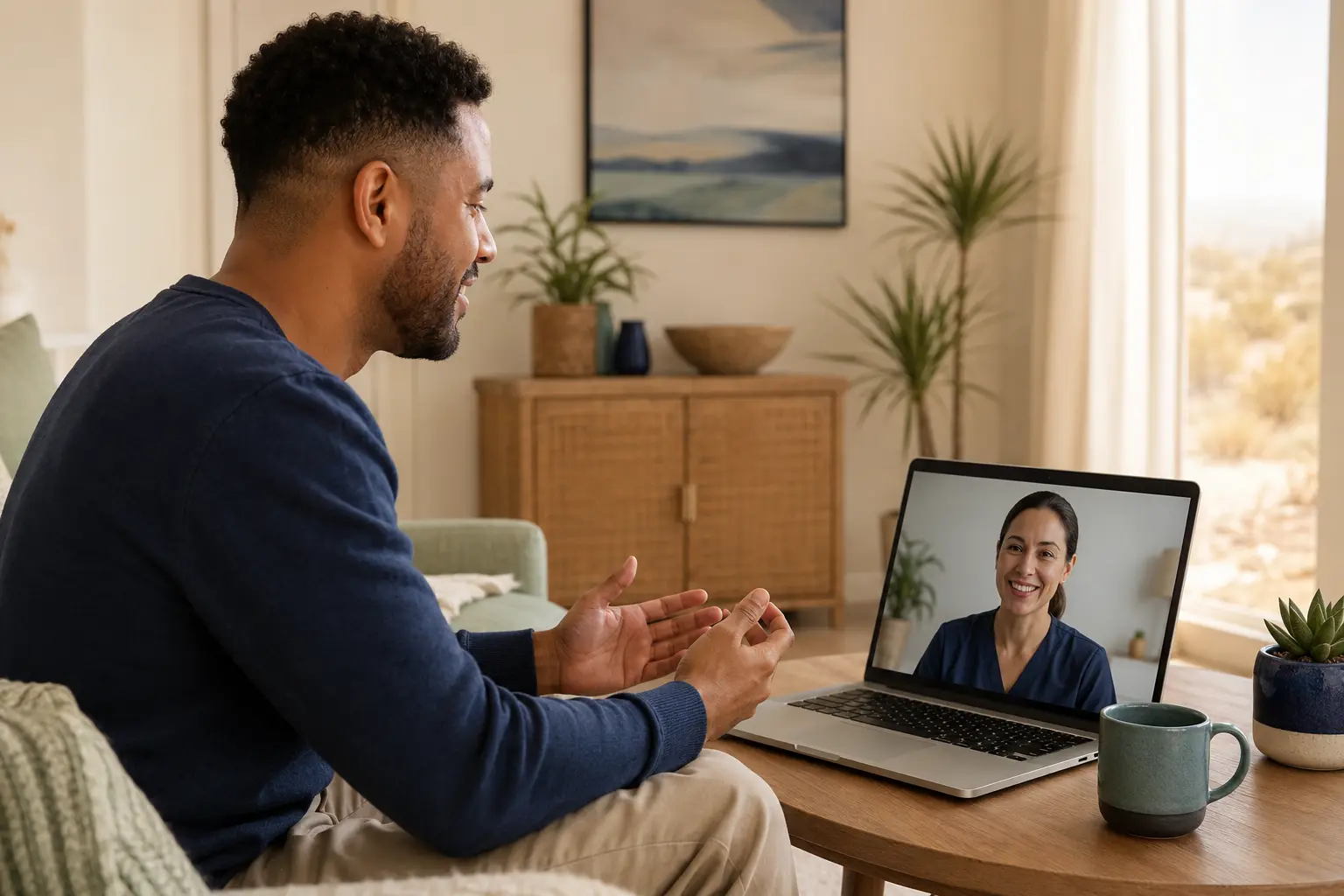
The same care conversation, over video.
A telehealth visit is a scheduled appointment with the same preparation, documentation, and follow-up as an office visit — the difference is where you sit. Your clinician reviews your history, talks through symptoms and goals, and plans next steps with you, just as in person. When something cannot be assessed safely from a distance, you may be asked to come in.
Telehealth may fit some follow-up care.
Certain primary-care follow-ups, behavioral-health visits, medication-management visits, counseling sessions, and care-coordination contacts may be offered remotely when clinically and legally appropriate. Whether a specific visit qualifies is confirmed when you schedule — eligibility can depend on the service, your location, clinical need, payer requirements, and current rules.
Primary-care follow-up
Reviewing stable, ongoing concerns when a hands-on exam is not needed that day.
Behavioral-health visits
Some evaluations and follow-up conversations may work well by video.
Medication reviews
Discussing benefits, side effects, and monitoring when prescribing rules allow.
Care coordination
Check-ins that help keep referrals, records, and services connected.
How to prepare for a telehealth appointment.
A few minutes of preparation helps the visit run smoothly and keeps the focus on your care.
- 01
Be physically located where your clinician is authorized to care for you
- 02
Choose a private, quiet setting where you can speak freely
- 03
Use a reliable internet connection and a camera-enabled device
- 04
Keep your current medication list and pharmacy information nearby
- 05
Write down questions ahead of time so nothing is missed
- 06
Expect to confirm your location and a callback number at the start
Some concerns need in-person or emergency care.
A clinician may recommend an in-person examination, vital signs, laboratory testing, urgent care, emergency evaluation, or another service when telehealth cannot support a safe assessment. If a video visit reveals something that needs hands-on care, the plan changes — safety comes before convenience.
Questions people often ask about telehealth.
How do I know if my visit can happen by telehealth?+
Eligibility is decided visit by visit, based on the service, your location, clinical need, insurance requirements, and current rules. Call 702-988-3177 and the team can confirm what is possible for your situation.
Can prescriptions be handled through telehealth?+
Some can, depending on the medication, prescribing regulations, and the evaluation. Certain medications require in-person assessment, and no visit — remote or in person — guarantees a prescription.
What happens if the connection drops?+
A callback number is confirmed at the start of each visit, so the conversation can continue by phone or be rescheduled if needed.
What if I am not comfortable with the technology?+
Tell the team when you call. They can talk through what the visit requires or plan an in-person appointment instead.